Far from city life, Madonna House stands by the Madawaska River in Combermere, Ontario. Catherine Doherty set up this Catholic group in 1947. The grounds also cover 200 acres of fields, woods and river bank. A main house, a chapel and a farm stand on the grounds. Craft rooms and quiet cabins for prayer stand here too. Life here moves to a plain beat of prayer, shared meals and hard work. Guests say a stay here feels like a fresh start for the soul. The house, the rooms and the field houses all share that same plain faith. Each day shows it in work, in prayer and in care for guests.
Madonna House Combermere Location
Combermere sits in the Madawaska Valley of east Ontario, a quiet rural place of lakes, woods and small towns. The house stands on the banks of the Madawaska River, with fields and woods all round the grounds. Highway 62 runs north from Bancroft to the village. Trees line much of the route, and the river stays close to the road for long miles.
Toronto lies near three hours away by car to the south-west. Ottawa lies near two and a half hours away. That gap shapes the whole trip, since guests leave fast roads and enter a slow rural world. Once in Combermere, the grounds feel set apart, yet still close to village life.
Madonna House Combermere Tour
A tour starts at the main grounds, where house, chapel, farm and craft rooms sit close as one. Then guests walk from house to house on foot. The short paths make the place feel like one small village. Green fields open out from the house, while wood trails lead off to the river. Each stop shows a new part of group life, from prayer to farm work.
Guides point out the chapel first, since prayer sits at the heart of each day. Next come the farm, the craft rooms and the quiet cabins, each with its own plain charm. Guests also see the Pioneer Museum, the gardens and the Marian shrine, all near the main house. By the end of the walk, the grounds feel less like a set of rooms. They feel more like one home shared by all.
Inside Madonna House: Interior and Features
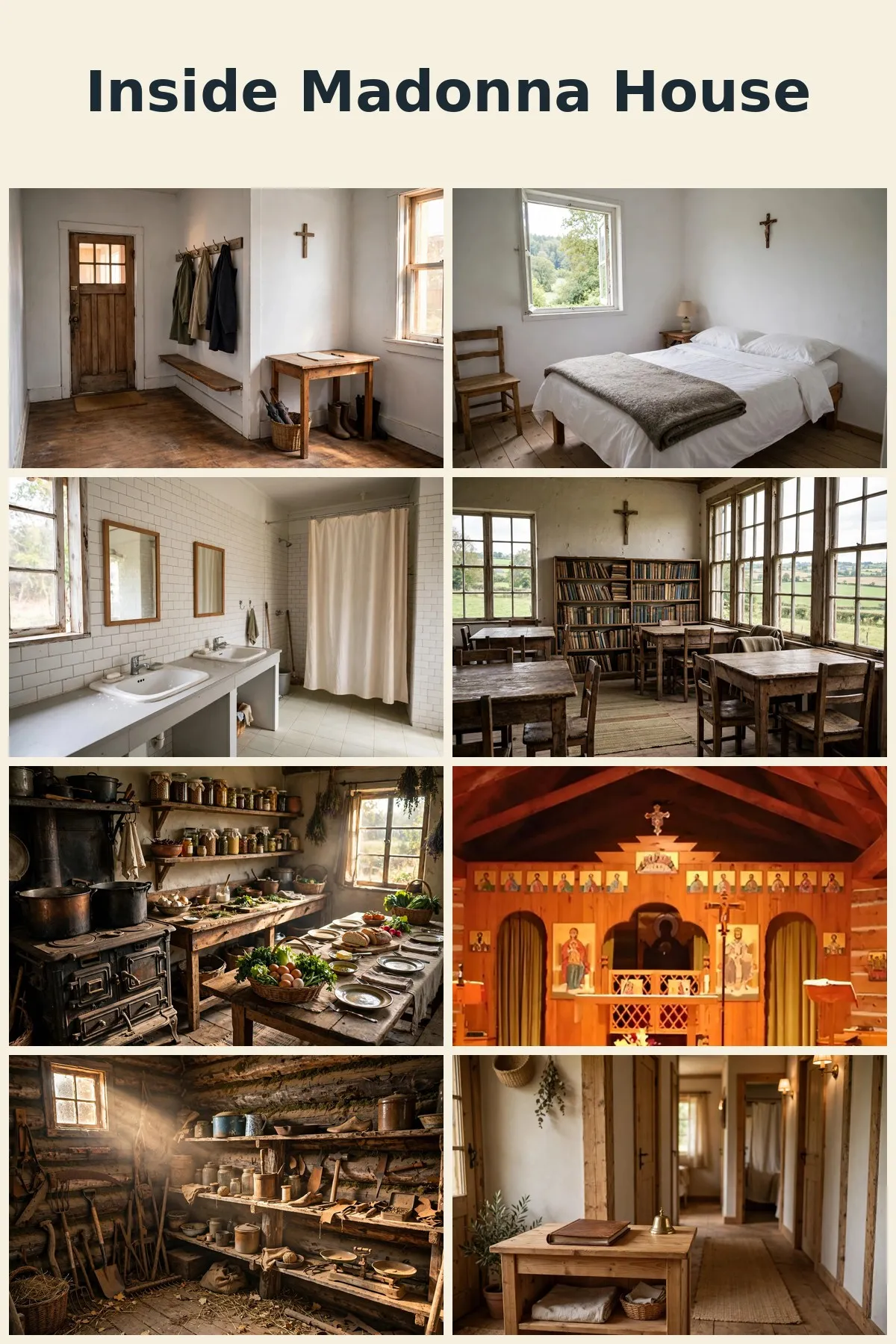
Inside, the house is plain on purpose. Rooms are plain, warm and made for shared life, not for show. They run from the small front hall and guest rooms to the busy farm kitchen and the quiet chapel. Each room serves the same plain life. Poustinia cabins give the group a quiet place set apart for prayer.
Grand Entrance and Foyer
Guests come in through a small front door that opens to a plain, warm hall. Coats hang near the door, and a small table holds notes for the day. The hall feels like the front hall of a big home. It has room to pause, say hello and find a kind face.
Bedrooms and Guest Rooms
Bedrooms here stay small, plain and clean, with a bed, a chair and space for prayer. Group members live in plain rooms of their own, while guests use plain guest rooms near the main house. Each room also holds just what a guest needs for rest and quiet time.
Bathrooms and Shared Washrooms
Baths here are plain and shared, made for daily use by a big house. Sinks, showers and toilets sit in clean, plain rooms with plain tile and good light. Members and guests share these rooms in turn, much as a big family group would share one bath.
Living Spaces and Common Rooms
Common rooms give all a warm place to sit, talk and read as one. Plain chairs, wood tables and rows of books fill these rooms, and big windows bring in light from the fields. People meet here after meals, in free time and on cold winter nights.
Kitchen and Farm Dining
Food here comes from the farm as much as from the shops, and the kitchen stays busy from dawn. Members cook in big pots, bake bread and set long tables for shared meals. Fresh milk, eggs and greens from the farm often reach the table the same day.
Special and Unique Spaces
Some rooms here serve a rare role that sets the place apart. Poustinia cabins stand in quiet spots on the grounds. One guest can spend a day or more there alone in prayer. A Marian shrine gives a still place to pause outdoors. Wood trails lead to spots for walks and thought.
Pioneer Museum and Historic Barn
A log barn on the grounds holds the Pioneer Museum, a small store of old days in the valley. Inside sit old household items, kitchenware, tools and farm gear from the first people here. Cobbler tools, hand tools and plain farm gear show how the first people lived and worked in the valley.
Security and Privacy
The house keeps no high walls, guards or locked gates, yet hush still counts here. Guests check in at the front desk, and staff show them to the right rooms and paths. Quiet rooms stay free from noise and crowds, so prayer and rest can go on in peace.
How Much Is Madonna House Worth?
The house has no sale price, since the group is a non-profit and the grounds are not for sale. A rough guess puts the 200-acre grounds at CAD $2 million to $5 million. That sum stays a guess only. No sale would test the true worth of the land, and no buyer waits in line. Gifts keep the group going, and each gift goes back to the work of the house.
Land, farm buildings, a chapel and craft rooms all sit on the same big grounds. That mix makes a firm worth hard to set. Farm land in rural Ontario, a work farm and old rooms each hold a new kind of worth. For that cause, the $2 million to $5 million range works best as a broad guide, not a firm price.
Madonna House Daily Life and Prayer
Each day starts early with prayer, and the chapel bell sets the pace for the hours that come. Members rise before dawn, meet for prayer and then share a plain first meal. Work fills the morning, from farm chores to kitchen work, cleaning and craft work in the rooms. Prayer breaks up the day, so work and prayer stay close as one from dawn to dusk.
Meals bring all to the same long tables, and talk stays warm and plain. Afternoons hold more work, study and time with guests, while evenings close with prayer and hush. Members take promises of poverty, chastity and obedience. Those promises shape how they live, work and share goods. Through that plain beat, the whole day becomes a form of prayer.
Madonna House Serving the Poor
Care for the poor stands at the heart of the group. It serves the poor in body and the poor in spirit. Members share food, clothes and kind words with people in need. They open their doors to those who need help. Warm care means more than a warm meal, since it also means time, care and a listening ear. That work grows straight from prayer, and prayer in turn grows from the work.
Field houses in Edmonton and Regina serve people with no home. They give food, clothes and kind words in their own towns. More houses give room and board to people who need a safe place to stay. Guests who come in need find a bed, a meal and a kind word. They face no cold form to fill in.
Madonna House Farm and Craft Studios
A work farm feeds the Combermere house and gives members true work each day. Cows, hens and gardens also give milk, eggs and fresh food for the kitchen. Fields and barns need care through each season. Members milk, plant, weed and reap in turn, and farm work shows care, thanks and love for the land. Food from the farm comes to the table fresh, and little goes to waste.
Craft rooms sit near the farm, where members make art, icons and pots by hand. Clay, paint and wood turn to plain, bright works that carry the faith of the house. Through craft, work turns to prayer too, and each work holds the slow care of the hands that made it.
Madonna House Publications and Restoration
Madonna House Publications serves as the print arm of the group, run as a non-profit. Staff print the works of Catherine Doherty, with books by more members of the group. Those books share the same plain faith that shapes life at Combermere, and they reach far past the valley. Print, bind and mail work all form part of the daily work of the house.
Restoration, the monthly paper of the group, has run with no break since 1947. Eddie Doherty, a news man by trade, set up the sheet in the first days at Combermere. Ten issues go out each year, with news, prayer and plain talk on faith in daily life. Through print, the small valley group speaks to friends far away.
Madonna House Chapel and Quiet Retreats
The chapel stands at the heart of the house, and prayer there shapes each day. Plain wood, soft light and quiet space help members and guests turn their minds to God. The doors stay open to those who seek a still place. No rich gold or grand art fills the room, since plain grace serves prayer best.
Quiet stays give guests a chance to step off from noise for a day or more. Poustinia cabins give a small, plain room for one guest to pray alone, with food left at the door. Wood trails, the Marian shrine and the river banks give more places for walks and thought. Through hush and rest, most guests find a fresh sense of peace.
Madonna House Visitors and Guests
Guests come to the house by road, and staff greet them at the front desk when they arrive. A short check-in gives each guest a room, a meal time and a guide to the grounds. Staff show new guests the chapel, the dining room and the paths to the farm and trails. That warm word sets the tone, since family care forms a core part of group life.
Retreat guests, family and friends of the group all find a place at Combermere. Some stay for a day, while more stay for a long stay in a poustinia cabin. Meals, prayer and farm walks fill the stay, and guests join the plain beat of the house.
Additional Madonna Houses and Field Houses
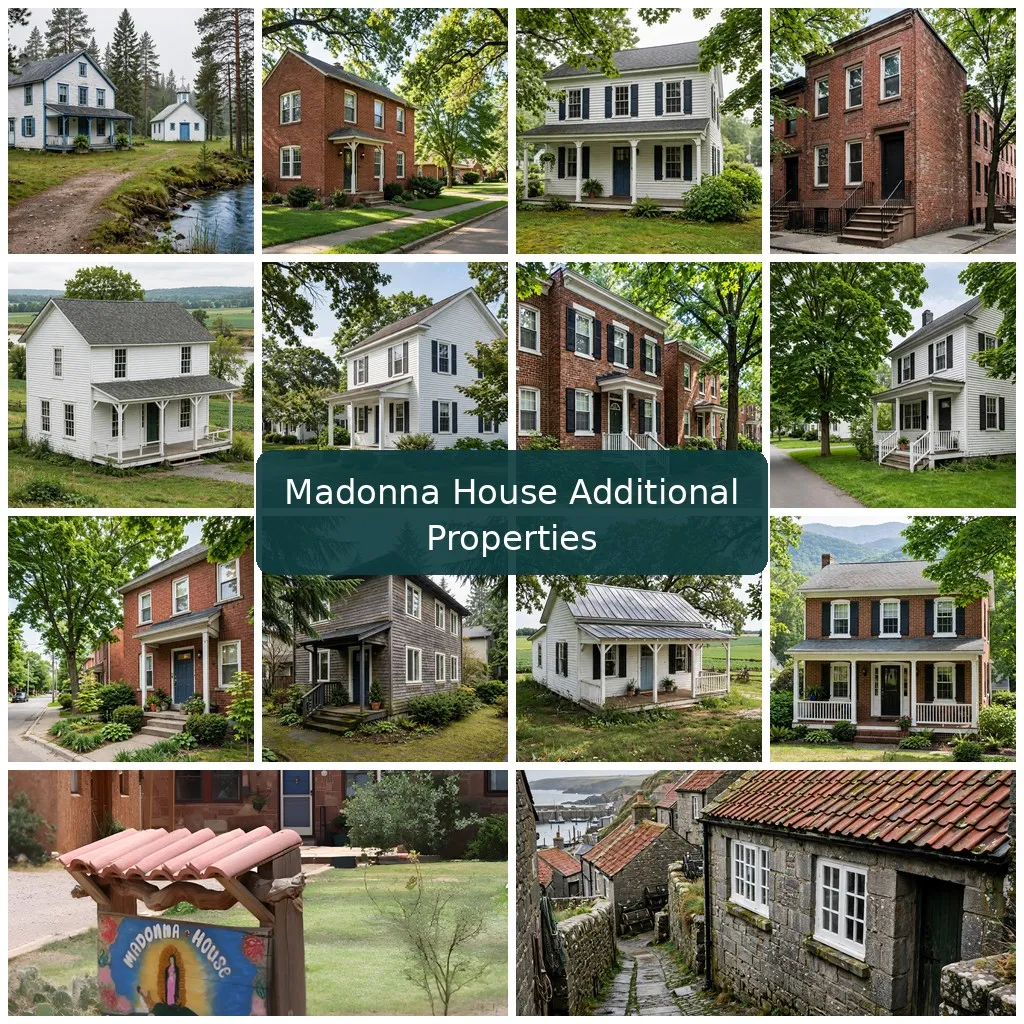
The Combermere motherhouse is just the start. Small field houses stand across Canada, the United States and England. They carry the same life of prayer, work and family care to towns and cities. Each one here bears the same group name, though a few serve their own towns in their own clear way.
Madonna House Combermere Motherhouse
Combermere serves as the motherhouse and training centre of the whole group. New members learn the life of prayer, work and family care here, with the help of older members. Main house, chapel, farm and craft rooms all sit on the same 200 acres. So training means real work from day one. From this quiet valley base, the group sends members out to field houses far off.
Madonna House Tulsa Oklahoma
Tulsa also holds a small field house that carries the Combermere life to Oklahoma. Members there pray, work and greet guests in the same plain way as the motherhouse. Town streets take the place of farm fields. Yet the beat stays the same, with shared meals and daily prayer at its heart. Local friends join the house for meals, talks and quiet time.
Madonna House Fredericksburg Belmont
Fredericksburg holds a field house that serves its own town under the name Belmont. Members live a plain life of prayer and work, and they open their door to local people in need. Shared meals, family talk and a warm word mark the house, much as they do at Combermere. Guests find a quiet place to rest, pray and talk things through.
Madonna House NYC
New York City holds a field house in the heart of one of the most busy towns on earth. Members there live the same plain life. Yet the noise and rush of the town sit just past the front door. Prayer, work and family care fill each day, and guests find a still room amid the crowds. That clash gives the house a rare role in the town.
Madonna House Northern Kentucky
Northern Kentucky holds a field house that brings the group life to the Ohio River zone. Members pray, work and share meals as one, and they greet local guests with the same warmth as Combermere. Rural roads and small towns shape the days, while the house stays close to its near people. Family words and prayer grow side by side in that quiet place.
Madonna House Neptune City, NJ
Neptune City, New Jersey, holds a house that serves infants, children and women with free goods. Rebecca Blonski set up the house in 1987, and it also gives clothes, food and care to families in need. This house stands as a separate but spiritually aligned group, not a field house of the group in full. Its work still shares the same soul of plain, family care.
Madonna House Washington DC
Washington DC holds a field house in the capital city, where prayer meets civic life. Members live, work and pray as one, and they greet guests who seek a quiet place in a busy town. Shared meals and daily prayer give the house its plain beat, much as they do at Combermere.
Madonna House Lockport
Lockport shows up on the list of field houses, yet little is known of this house. No state comes with the name, and no clear note ties it to the group. A Madonna House in Lockport, New York, serves as a home for women in rehab. But that place belongs to a different group. For that cause, this name stays in doubt, and no firm claim is made of it here.
Madonna House Toronto, Ontario
Toronto holds a field house in the town where Catherine Doherty first worked with the poor. Her first Friendship House in Toronto, in the 1930s, grew from that same wish to serve. Now the Toronto house keeps that link live, with prayer, work and a warm word for town guests. Members share meals, care for local people and keep the doors open to those in need.
Madonna House Vancouver, British Columbia
Vancouver holds a field house on the west coast of Canada, far from Combermere. There, members live the same life of prayer, work and family care, with high hills and sea close by. Guests also find a warm word, shared meals and a quiet place to pray. Town life and plain faith meet in that house, much as they do in more field houses.
Madonna House Salem, Missouri
Salem, Missouri, holds a small field house in the rural heart of the state. Members also live a quiet life of prayer and farm work, close to fields and small towns. Guests find a plain word, shared meals and time for talk and prayer. That rural spot fits the Combermere soul well, since work and prayer grow close to the land.
Madonna House Roanoke, Virginia
Roanoke, Virginia, holds a field house in the Blue Ridge zone of the state. Members pray, work and greet guests in the same plain way as the motherhouse. Hills and small towns shape the days, while shared meals bring members and guests as one. Local friends find a quiet place to rest, talk and pray in that house.
Madonna House Winslow Arizona
Winslow, Arizona, holds a field house in the high desert of the Southwest. Members live the same life of prayer, work and family care, under wide skies and dry air. Guests also find a warm word, shared meals and a quiet place to pray.
Madonna House Robin Hood’s Bay
Robin Hood’s Bay holds a field house on the wild coast of England. Members live, pray and work as one in a small fishing village by the North Sea. Sea winds, steep lanes and old stone homes shape the days, while shared meals bring warmth indoors. Guests find a quiet place to rest, pray and walk the shore.
Where Does the Madonna House Community Live Now?
Members of the group still live at Combermere, on the same grounds Catherine Doherty set up in 1947. Counts change by source, with one count near 100 staff at Combermere and more counts near 200 members in all. A 2023 count gave 188 members in all, with 126 at Combermere and 12 of them priests. No one count stands as firm fact, since each source counts members in its own way.
Field houses still carry the same life to Canada, the United States and England. Some houses serve towns, while more serve small towns and rural spots. Ottawa once held a field house too, but that House of Prayer shut in 2023 after nearly 50 years. Through Combermere and its field houses, the group keeps its plain life of prayer, work and warm care alive today.
Catherine Doherty Founder of Madonna House
Catherine Doherty was born on August 15, 1896, in Nizhny Novgorod, Russia. She died on December 14, 1985, at Combermere. Catherine came to Canada as a young woman, and she gave her life to care for the poor. With her husband Eddie Doherty, she built a group based on prayer, work and family care. Her faith shaped each part of the house that carries her name.
Before Combermere, Catherine ran Friendship House in Toronto in the 1930s, a house of warm care for the poor. Sources give 1931 and 1934 for that start, so the true year stays in doubt. On May 17, 1947, Catherine and Eddie came to Combermere and moved to an unfinished six-room house by the stream. From that small start, the group grew to the motherhouse, farm and field houses known now.
Catherine wrote more than 30 books on prayer and faith, and the church now calls her Servant of God. The church now studies her life for sainthood. Through her books, her paper and the group she set up, her plain faith still reaches people far beyond Combermere. Her life shows how one small house can grow to a work around the world.
Madonna House Frequently Asked Questions
Can Anyone Visit Madonna House?
Yes, guests can come to the house, and staff greet retreat guests, family and friends of the group. Guests check in at the front desk. They get a room and meal times, and join the plain beat of prayer and shared meals. Some stay for a day, while more book a long stay in a poustinia cabin. A warm word waits for each guest who comes with an open heart.
Where Is Madonna House Located?
The house stands in Combermere, Ontario, on the banks of the Madawaska River in the Madawaska Valley. Highway 62 runs north from Bancroft to the town. The grounds span 200 acres of fields, woods and river bank. Toronto lies near three hours off by car, while Ottawa lies near two and a half hours off. That rural spot gives the place its quiet charm.
Who Founded Madonna House Combermere?
Catherine Doherty set up Madonna House Combermere in 1947, with her husband Eddie Doherty. The couple came to Combermere on May 17, 1947, and moved to an unfinished six-room house by the Madawaska River. Catherine had served the poor through Friendship House in Toronto in the 1930s. From that small start, she built a group of lay men, women and priests.
What Is Madonna House Worth?
The house has no firm sale worth, since the group is a non-profit and the grounds are not for sale. A rough guess puts the 200-acre grounds at CAD $2 million to $5 million. That range stays a guess only. Gifts keep the group going, and each gift goes back to care for the poor. Faith, not cash, gives the place its true worth.
How Many Field Houses Exist?
No one count settles the number of field houses, since sources give different figures. One count gives 14 live field houses, while the group’s own count gives 18. More sources give 16 mission houses, old counts give 23, and one source speaks of two dozen. That range shows how hard the count is to fix, since houses open, shut and change with time.
Madonna House Combermere Lasting Legacy
The house began in 1947 as one unfinished six-room house by the river. It grew to a group that still serves the poor today. Prayer, work and family care shape each day at Combermere. They run from dawn chapel prayer to farm chores, craft work and shared meals. Field houses carry that same plain life to towns far off. Through books, a paper and quiet care, the group speaks far past its valley.
Catherine Doherty left a mark of plain faith lived out in daily work, and her group keeps that mark live. Guests still find rest, prayer and a warm meal at Combermere, much as the first guests did in 1947. Members still rise at dawn, work with their hands and share what they have. In a loud world, that quiet life still speaks with clear and soft force.