Picking a green for a bedroom starts with a choice between paint and fabric. Paint sets the mood of the room at once, while fabric lets green come and go. Sage walls, emerald velvet, olive linen, and forest plaid each push a room in a different direction. Bedroom decor ideas green span all four, from pale mint to deep forest. Light decides how deep each shade reads after dark, so test a swatch beside the bed first.
Paint-led rooms suit renters least and owners most, since a wall color stays put for years. Fabric-led rooms suit a weekend change, since bedding, curtains, and throws swap out in an hour. Small rooms gain most from pale mint or sage. Large rooms carry deep forest or emeralds without going dark. Plant-heavy rooms suit a bright window, while lamp-lit rooms suit velvet and dark wood.
1. Rattan Arch Headboard
Muted sage paint covers the walls behind a tall arched rattan headboard with a woven cane center. White linen bedding lies loose across the bed, with a sage knit throw folded at the foot. Light wood nightstands flank the bed, one holding a terracotta pot of eucalyptus. Woven jute rug spreads under the bed across wood floorboards. Macramé hangs near a rattan pendant light, while dried pampas fills a wall basket by the headboard.
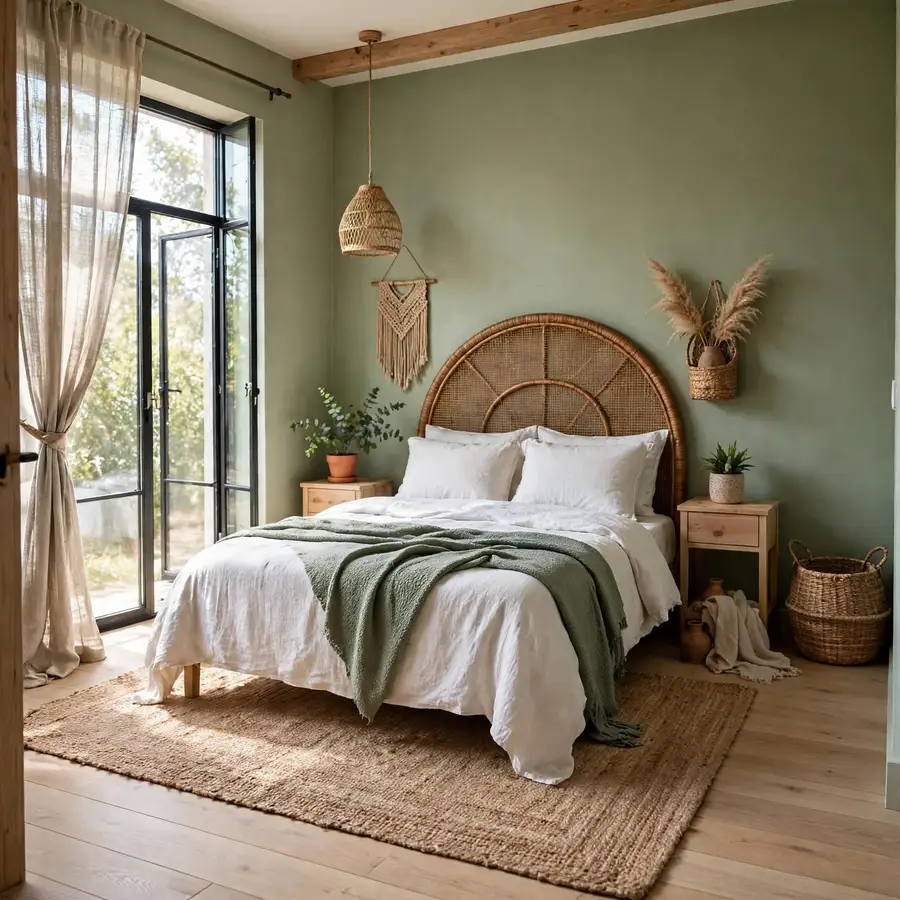
Start with the wall paint, since the headboard and bedding both sit against it. Hang the woven wall pieces before the bed goes in, so spacing stays even on both sides. Place nightstands after the bed, leaving a hand-width gap from the frame for bedding to tuck. Swap the knit throw for a lighter cotton one in warm months. Dust the cane headboard with a dry cloth each week, since dust shows fast on open weave.
2. Emerald Velvet Headboard
Emerald velvet covers a tall tufted headboard that rises nearly to the ceiling against cream walls. White bedding spreads across the bed with a folded cream throw and three emerald velvet pillows. Brass table lamps glow on dark wood nightstands on both sides of the bed. Gold-framed mirror hangs above the right nightstand beside a vase of eucalyptus. Olive tree in a woven basket stands in the corner by cream curtains.
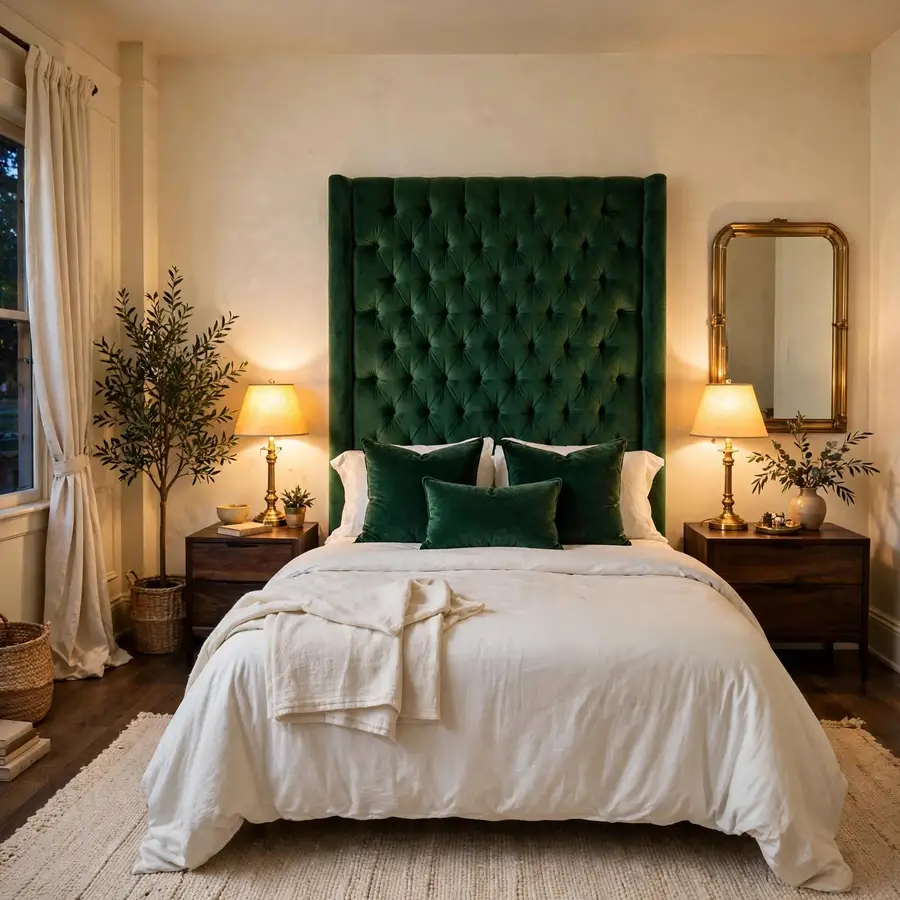
Center the headboard on the longest wall, then measure equal gaps on both sides. Set each lamp near the outer edge of its nightstand, so the glow falls on the wall. Leave the mirror above the right nightstand at eye level from the bed. Skip a third pillow color here, since two greens plus cream already fill the palette. Wipe velvet with a dry cloth, since water marks the nap.
3. Forest Green Accent Wall
Deep forest green paint covers the wall behind a light oak bed, while the side wall stays white. White bedding spreads across the bed with a dark green knit throw folded at the foot. Black-framed print of eucalyptus hangs centered above the headboard. Walnut nightstands hold a clay vase with olive branches and a small potted tree. Monstera leaves rise from a woven basket by the tall window with cream curtains.
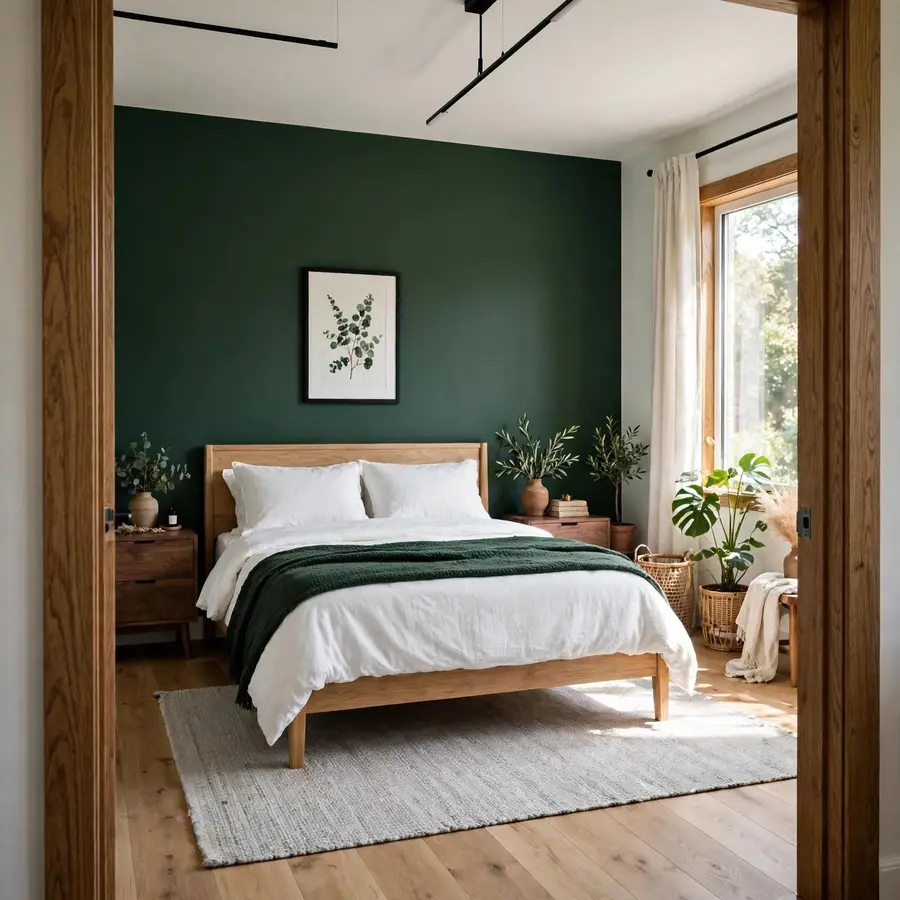
Paint one wall first and live with it for a week before touching the other three. Use a flat or eggshell finish, since gloss shows every bump on a dark wall. Swap the framed print for a woven wall hanging when the wall feels too flat. Match the throw to the wall instead of the bedding, so the bed stays light. Touch up scuffs with a small brush, since dark paint shows marks fast.
4. Olive Linen Bed Layers
Olive green linen covers the bed from pillows to hem, with a beige knit throw across the middle. Cream pillows sit in front of olive pillows against a light wood slat headboard. Slatted wood bench stands at the foot of the bed on a woven jute rug. Potted olive tree in a terracotta pot fills the corner by the glass doors. Open shelves on the left wall hold small pots, folded cloth, and dried grass.
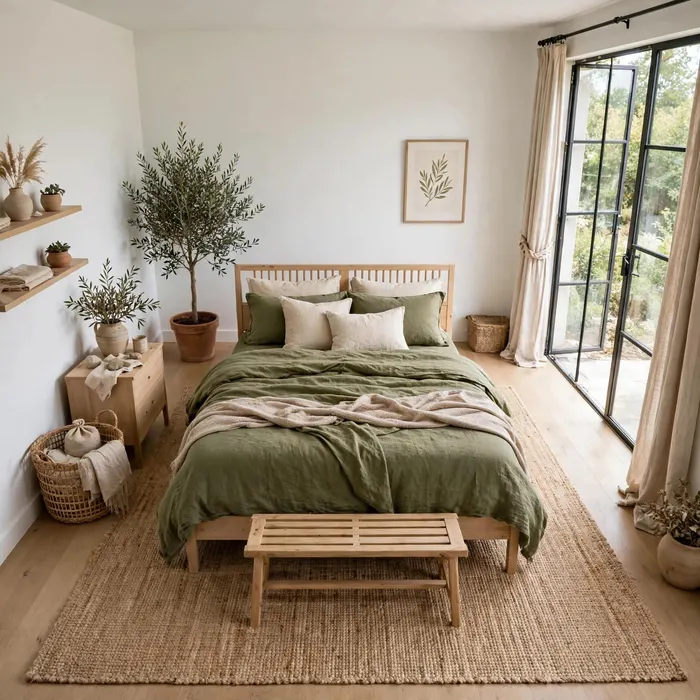
Make the bed with the fitted sheet first, then the duvet, then the pillows from back to front. Fold the throw across the middle third of the bed, so it covers the duvet crease. Keep the bench clear of laundry, since it reads as clutter fast in a small room. Wash linen on a gentle cycle and line-dry it, since heat shrinks the weave. Shake the rug outside once a month to keep dust down.
5. Mint Walls, Spindle Bed
Pale mint paint covers the walls around a white spindle bed at the center. White bedding spreads across the bed with mint pillows and a mint throw at the foot. Dresser in white with wood knobs stands on the right wall under a round rattan mirror. Sheer white curtains frame the tall window on the left wall. Woven basket with a rolled blanket and a potted succulent sits on the floor by the bed.
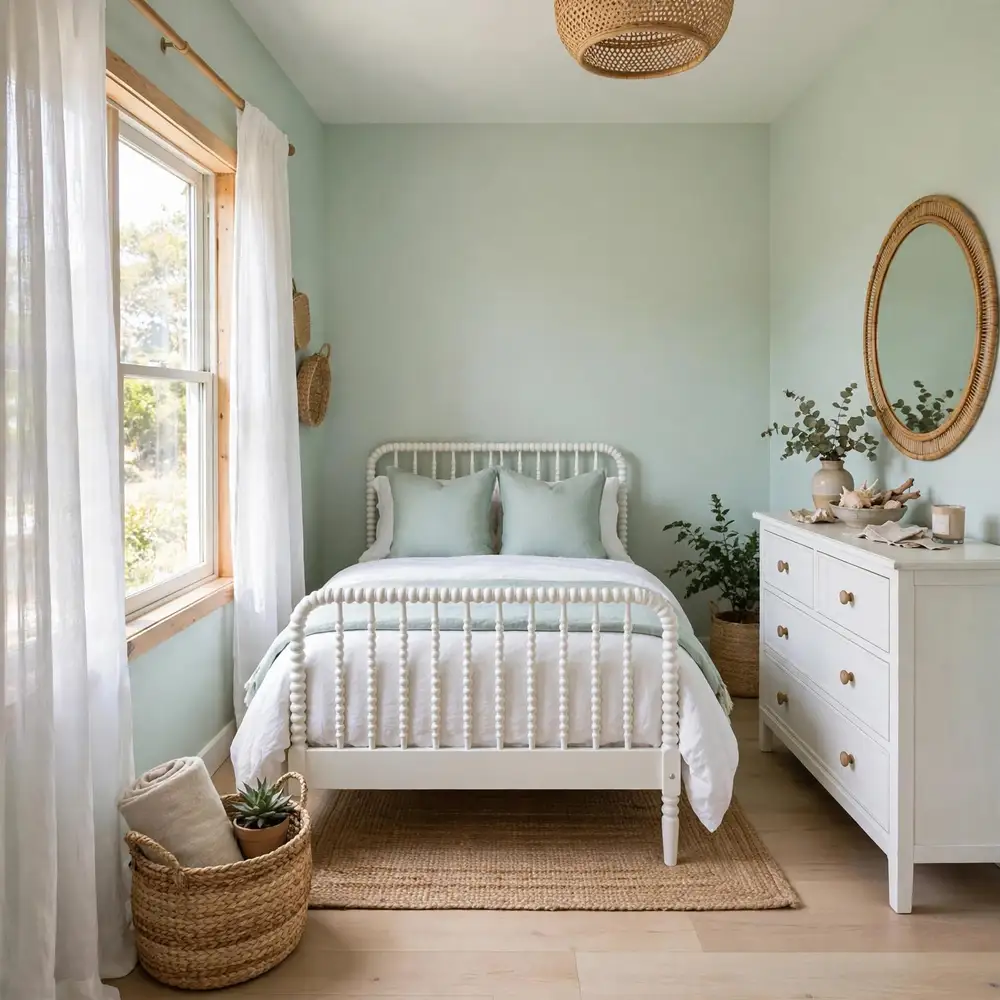
Push the bed against the far wall, leaving the window wall free for light. Hang the mirror across from the window, so it bounces daylight into the room. Keep the dresser top to three items, since a small room shows clutter fast. Swap the basket for a lidded box when spare bedding or cords need hiding. Check the curtain rod anchors before hanging heavy drapes, since plaster walls need the right fixings.
6. Leafy Wallpaper Backdrop
Dark green wallpaper with large leaf prints covers the wall behind a cream tufted headboard. Cream bedding spreads across the bed with leaf-print pillows and a folded cream throw. Dark wood nightstands hold cream ceramic lamps with white shades on both sides. Cane chair with a draped throw sits in the left corner under a framed leaf print. Olive tree in a woven basket stands by the tall window with white curtains.
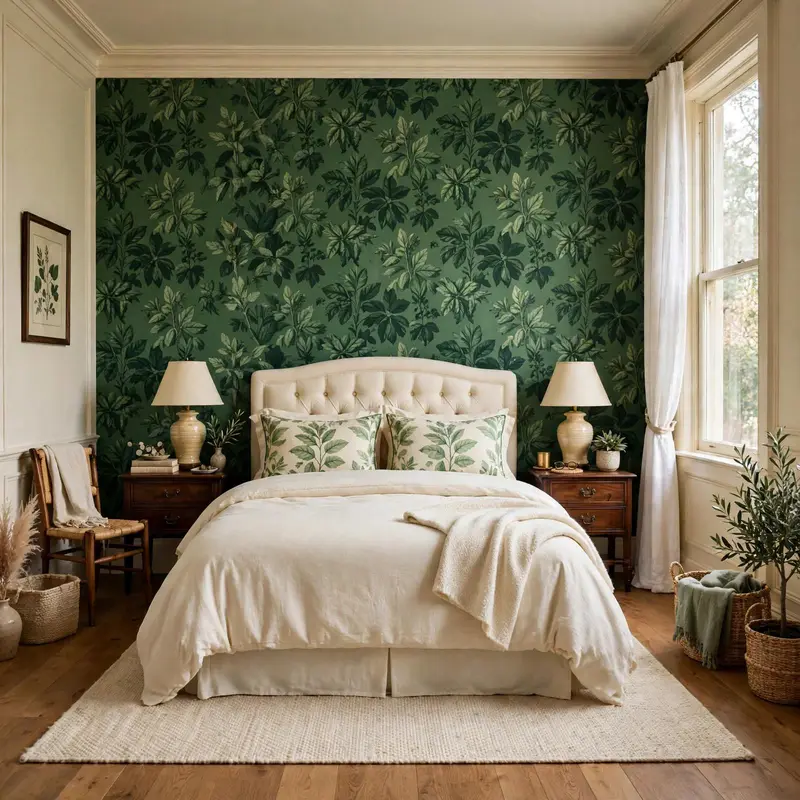
Cover the bed wall only with the paper, since a full room of large print overwhelms small spaces. Match the pattern at the seams before pasting each strip, and trim the excess at the ceiling line. Keep bedding plain, so the wall stays the lead pattern in the room. Swap the leaf pillows for solid ones when the print feels busy. Dust the paper with a dry cloth, since water can lift the edges.
7. Striped Green Ceiling
Hunter green and white stripes run across the ceiling above white walls and a dark wood bed. White bedding spreads across the bed with hunter green velvet pillows at the head. Green and white striped armchair sits in the left corner beside a woven side table. Four framed leaf prints hang in a row above the headboard. Tall glass doors with white curtains fill the right wall. Monstera in a woven basket stands beside them.
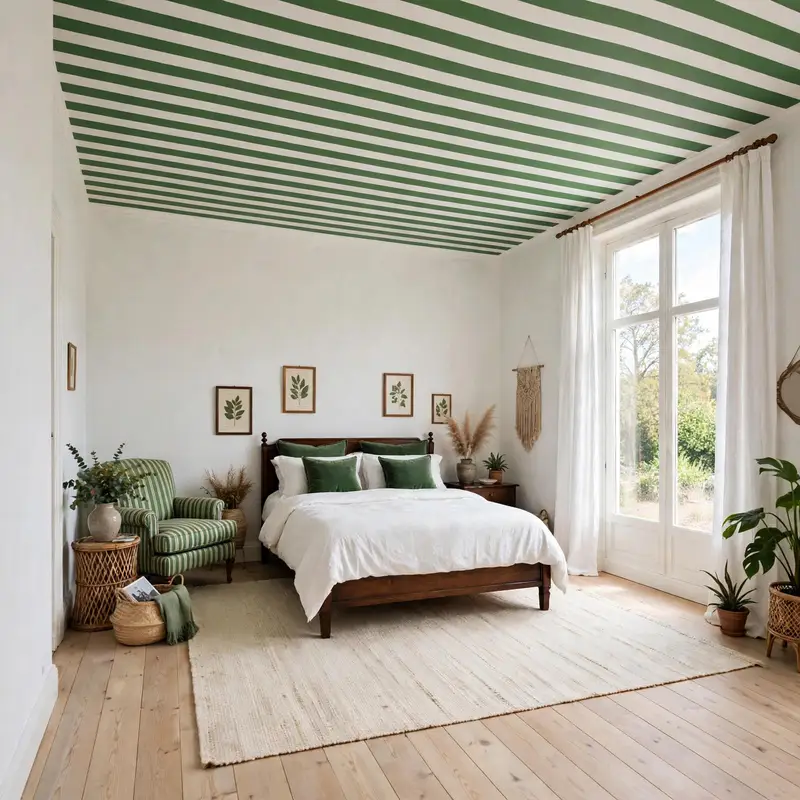
Mark the stripes with painter’s tape and a level before any paint touches the ceiling. Paint the lighter stripes first, let them dry fully, then tape and paint the green bands. Keep the walls plain white, since the ceiling already carries the pattern. Swap the striped chair for a solid one when the room feels too busy. Use a stable step ladder with a spotter, since ceiling work strains balance.
8. Sage Shiplap Bed Wall
Sage green shiplap boards cover the wall behind a light oak bed. White linen bedding spreads across the bed with a sage throw folded at the foot. Black metal sconces with glass shades hang on the shiplap above each nightstand. Oak nightstands hold a bowl, a candle, books, and a glass vase with dried grasses. Woven rug lies under the bed across wide wood floorboards, and a wood beam crosses the ceiling.
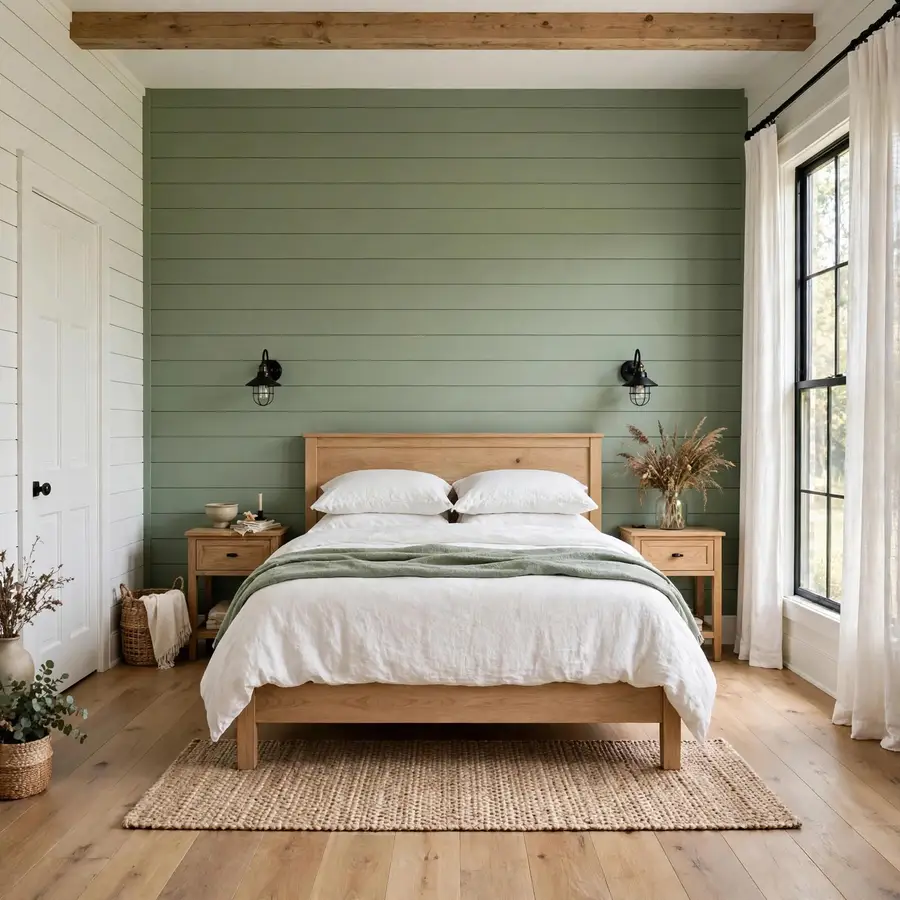
Install the boards horizontally from the floor up, checking each row with a level. Paint the boards after install, since brush strokes hide the seams better that way. Hang the sconces at head height, so light falls on the pillows and not in the eyes. Swap the dried grasses for fresh stems when the vase looks bare. Wipe the boards with a damp cloth, since dust settles fast on horizontal seams.
9. Moss Velvet Bed Frame
Moss green velvet covers a low bed frame with gray bedding and moss green velvet pillows. Gray boucle bench with a folded gray throw stands at the foot of the bed. Two framed abstract prints hang on the pale gray wall above the headboard. Black arched floor lamp glows in the corner beside a potted fig tree in a woven basket. Sheer curtains frame tall windows that show evening lights outside.
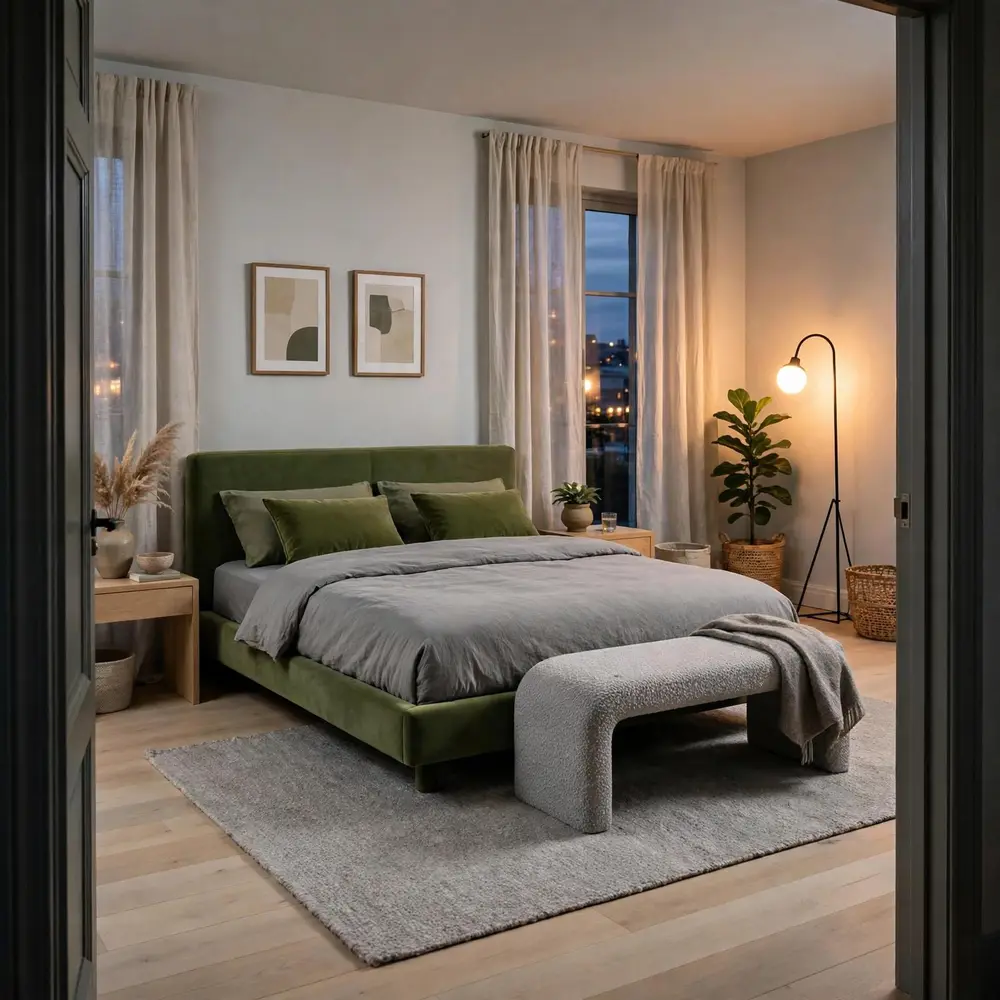
Start with the upholstered frame, since it sets the color for the whole room. Swap the boucle bench for a plain wood one when the budget runs tight. Keep the wall art to two frames, since a third crowds the headboard. Use a warm bulb in the floor lamp, since cool light turns gray bedding blue. Vacuum the bench with an upholstery head each week, since boucle traps dust.
10. Clay Lamps, Pistachio Walls
Pale pistachio plaster covers the walls under rough wood ceiling beams. Terracotta clay lamps with cream shades stand on light wood nightstands beside the bed. White bedding spreads across the bed with a terracotta linen throw folded down the middle. Terracotta pots with small green plants line the wide sill of the open black-framed window. Woven basket with folded cloth sits in the corner beside a clay vase with dried stems.
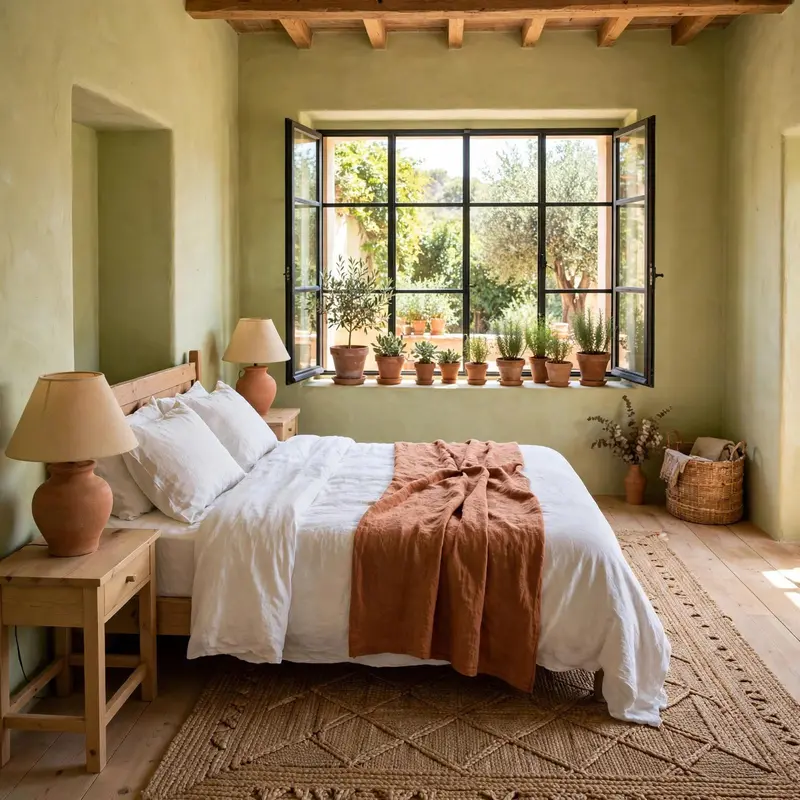
Set the pots on the sill first, then place the lamps, since the plants need the brightest spot. Water the sill plants in the sink, since spills stain plaster fast. Keep the throw folded, not bunched, so the bed reads neat from the door. Swap clay lamps for wood ones when the room already holds enough terracotta. Wipe the plaster walls with a dry cloth, since wet marks show on matte paint.
11. Floral Quilt in Sage
Sage green walls rise above sage wainscot behind a white wood bed. Floral quilt in sage and blush pink covers the bed over blush sheets. Blush pillows sit at the head. Two framed botanical prints hang above the headboard. Cream nightstands hold a vase of dried stems, stacked books, and a pink jug with pampas grass. Faded floral rug lies on the wood floor. Wicker chair with a cream throw sits by the window.
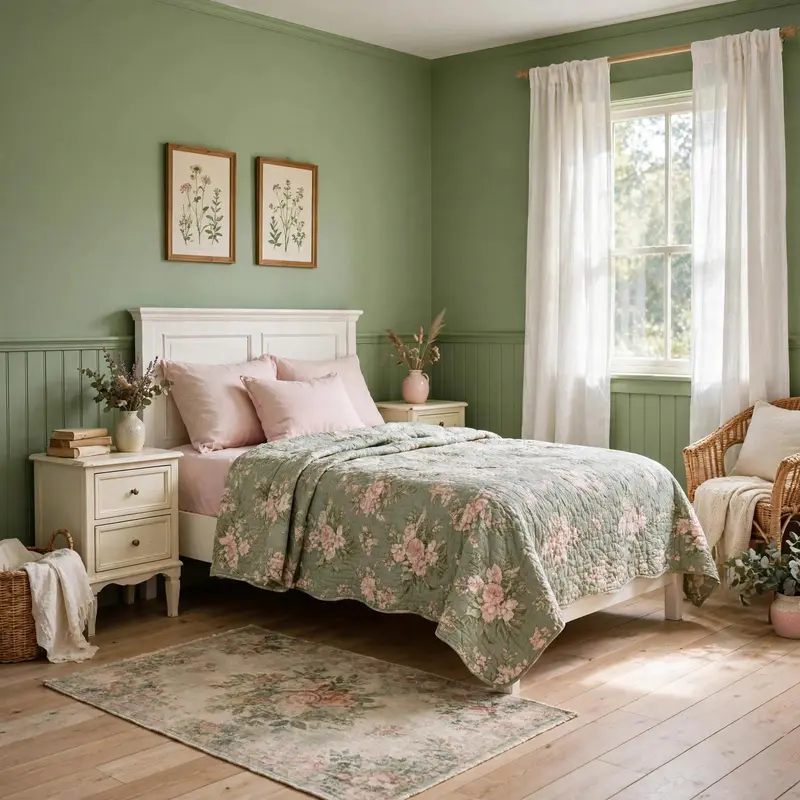
Lead with the quilt, since it holds the most pattern in the room. Match the pillows to the quilt, not to each other, so the bed looks gathered and not matched. Keep the rug faded and light, since a dark rug fights the quilt. Swap the pink jug for a plain vase when the nightstand looks crowded. Wash the quilt on a gentle cycle and dry it flat, since quilting shifts in heat.
12. Brass Sconces, Green Wainscot
Hunter green wainscot panels run along the lower walls under cream upper walls. Brass swing-arm sconces glow on both sides of a cream tufted headboard. White bedding spreads across the bed with hunter green velvet pillows at the head. Dark wood nightstands hold a vase of olive branches, stacked books, and a brass box. Cane chair stands by the window on the left. Dark wood dresser holds a vase of pampas grass on the right.

Paint the lower panels first, then the upper wall, since drips fall down. Mount the sconces with the shades at eye level from the bed, so light pools on the pillows. Anchor the dresser to the wall with straps, since tall drawers tip when a child climbs. Keep the nightstands clear of cords, since lamps plus phones crowd small tops. Touch up the panels with a small brush, since dark paint shows scuffs fast.
13. Bookshelf Alcove Bed
Sage green built-in shelves wrap around a light wood bed, filling the wall from floor to ceiling. Books, small plants, and clay pots fill the shelves in rows. White bedding spreads across the bed with sage pillows and a sage throw folded at the foot. Oak nightstands stand on both sides of the bed under the shelves. Small lamp glows in a shelf nook to the left. Cream rug lies on the wood floor.
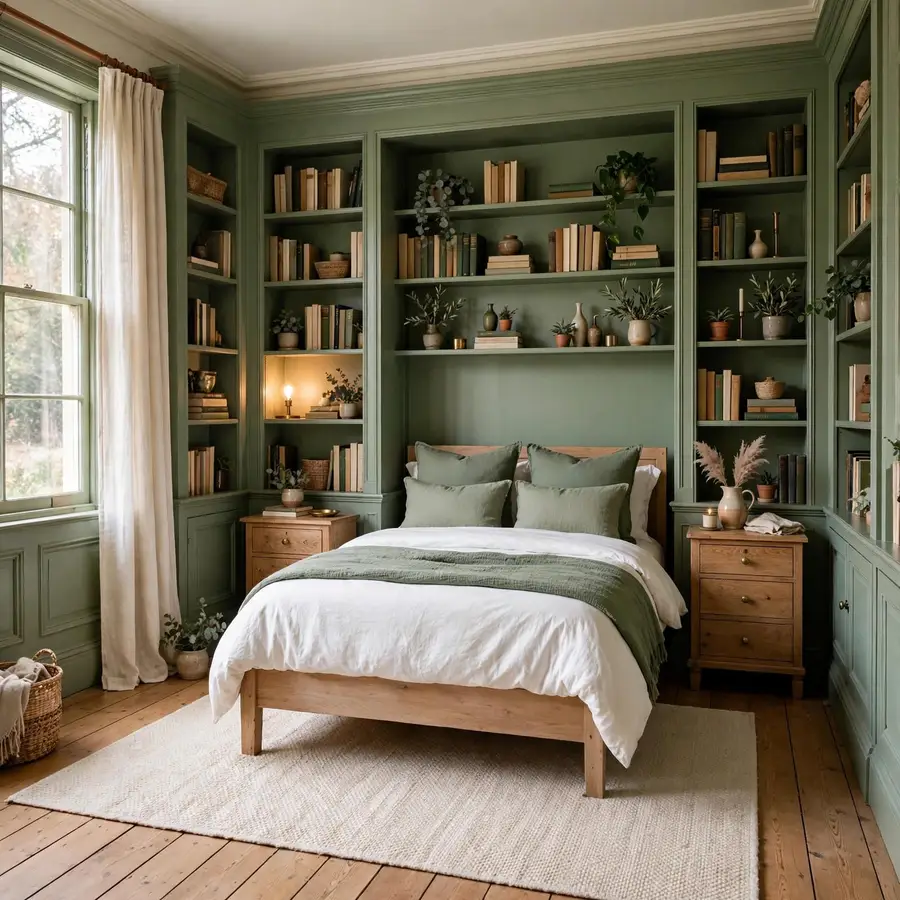
Build the shelves first, since the bed must fit the gap they leave. Leave one shelf open per side, so books and plants mix and the wall breathes. Place the bed after the shelves, centering it in the alcove with equal gaps. Swap the nightstands for floating shelves when floor space runs short. Dust the top shelves monthly, since they sit above eye level and gather dust unseen.
14. Emerald Velvet Curtains
Floor-length emerald velvet curtains frame a tall window on a soft gray wall. White bedding spreads across the bed by the window with emerald velvet pillows and gray pillows. Brass floor lamp stands at the head of the bed with a gray fabric shade. Rattan nightstand under the window holds a vase of pampas grass and books. Olive tree in a woven basket stands in the left corner by a framed leaf print.
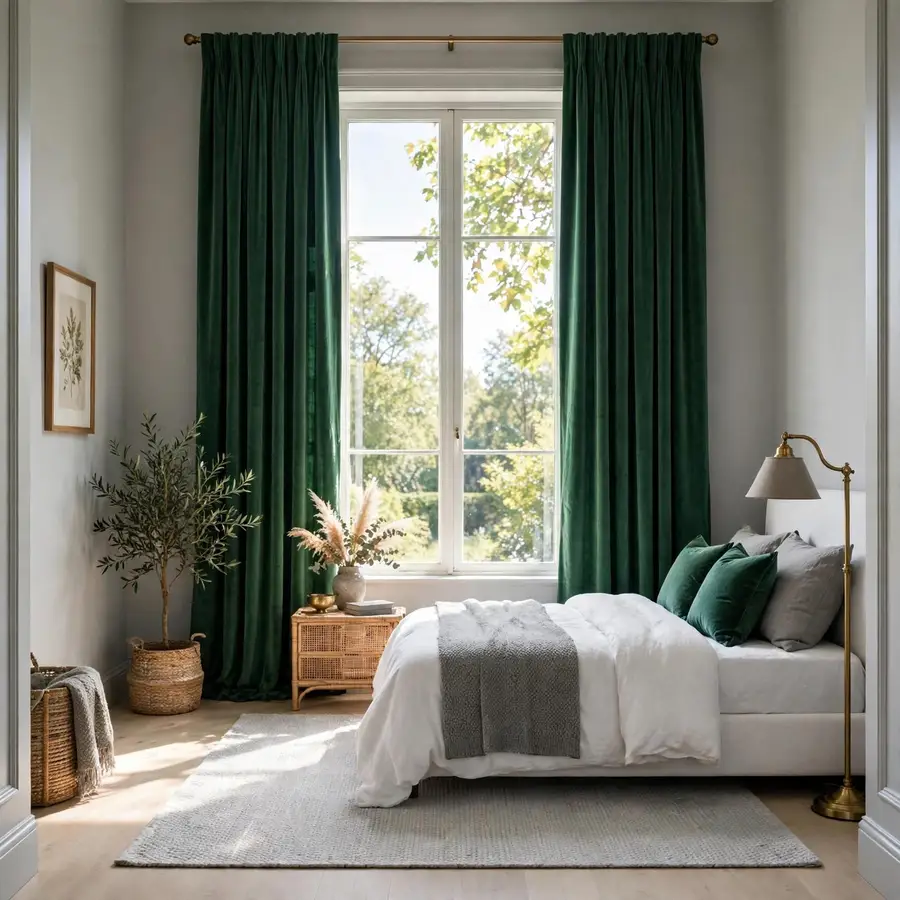
Mount the rod wide and high, so the curtains stack past the frame and not over the glass. Choose a lined fabric, since unlined velvet fades fast in strong sun. Keep the bed low and plain, so the curtains stay the tallest line in the room. Swap the brass lamp for a ceramic one when the metal feels too bright. Vacuum the curtains with an upholstery head, since velvet holds dust.
15. Forest Plaid Bedding
Forest green and cream plaid covers the pillows and the folded throw on a dark log bed. Cream bedding spreads under the plaid throw across the bed. Plaid armchair with wood arms sits in the corner by the tall black-framed window. Rough log nightstands hold a clay vase with olive branches, a candle, and stacked books. Dried wreath and woven wall basket hang above the bed. Braided rug lies on the wood floor.
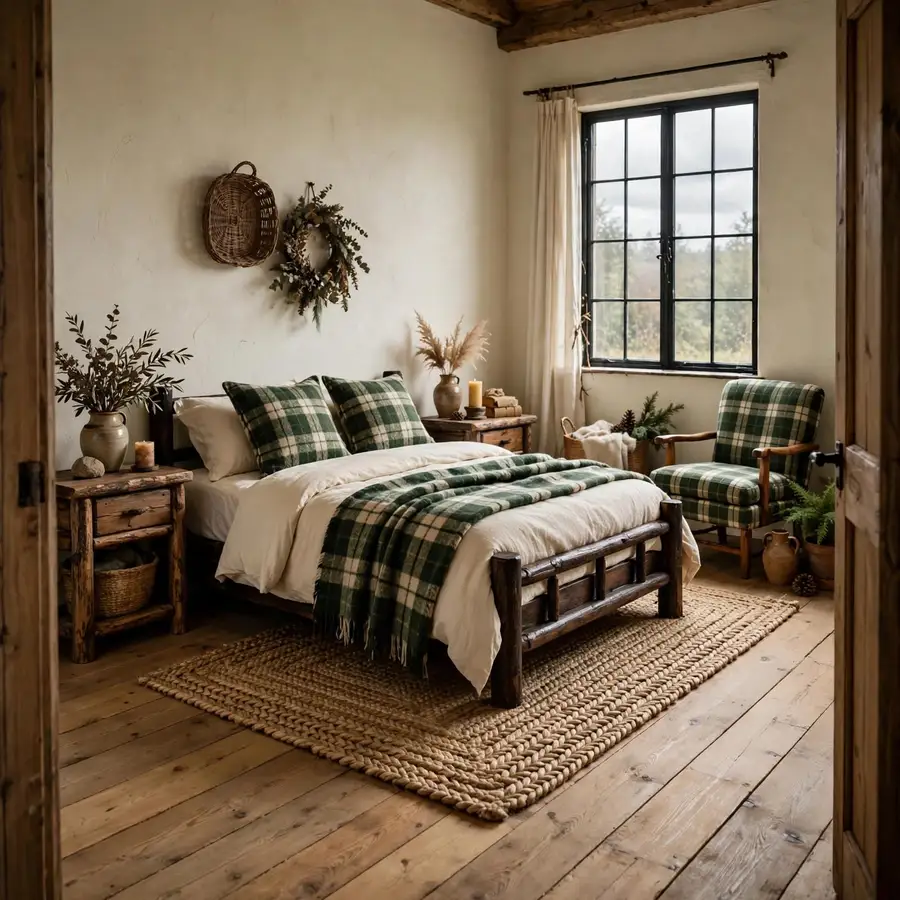
Start with the plain cream bedding, then layer the plaid throw and pillows on top. Match the armchair plaid to the throw, so the two prints read as one set. Keep the candle on a flat tray away from the throw, since open flame near fabric risks fire. Swap the log nightstands for painted ones when the room feels too dark. Shake the throw outside, since wool holds dust and needs air.
16. Lime Chair by Windows
Pale green walls surround a white bed with lime green velvet pillows and a pale green throw. Lime green velvet chair with wood legs sits by the tall windows on the right. Two framed leaf prints hang on the wall above the bed. Monstera in a woven basket stands in the corner by sheer white curtains. Small round wood table with a book stands beside the chair. White rug lies under the bed.
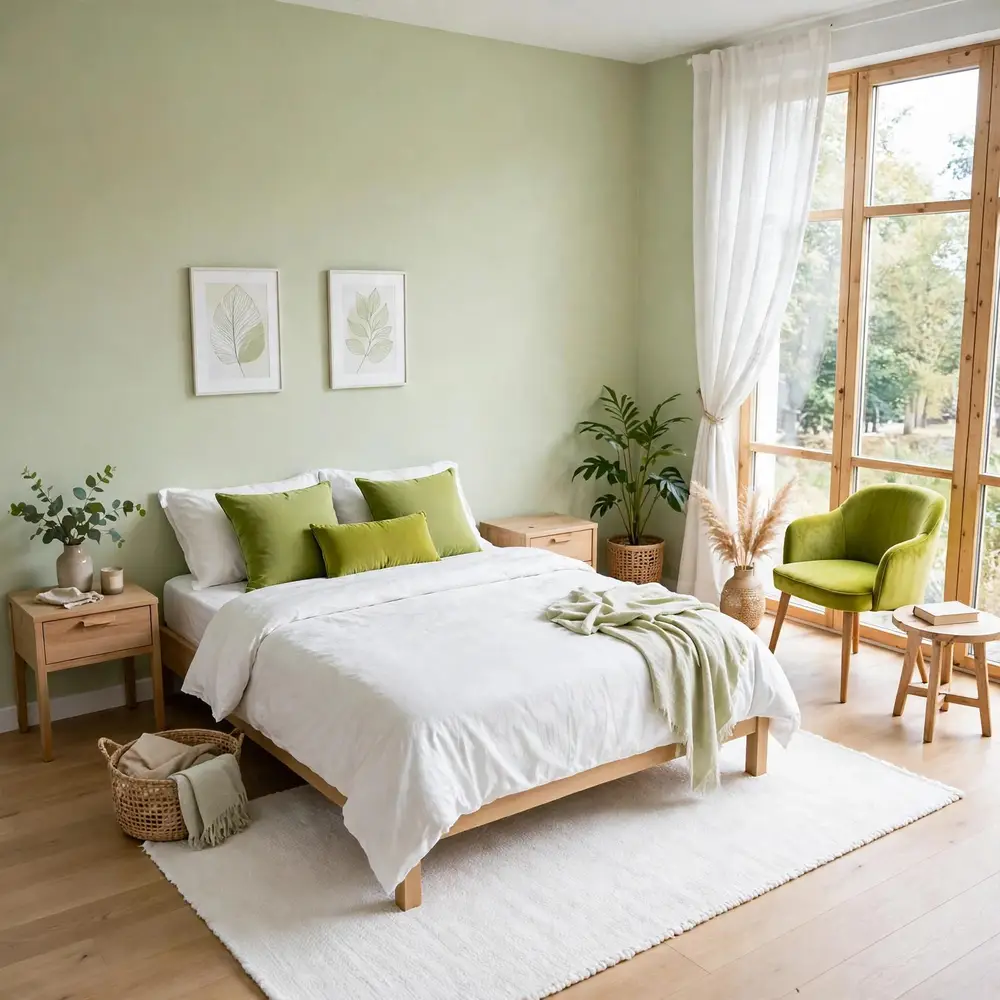
Place the chair at an angle to the window, so it catches light without blocking glass. Keep the side table within arm’s reach, since the chair sits far from the bed. Match the chair to the pillows, not to the walls, so the green reads as one note. Swap the book for a small plant when the table looks bare. Vacuum the velvet with an upholstery head, since dust shows fast on bright fabric.
17. Olive Linen Curtains
Olive green linen curtains hang from floor to ceiling along two window walls at dusk. Cream bedding spreads across a dark wood bed with olive green pillows at the head. Table lamps glow on dark wood nightstands on both sides of the bed. Dark wood dresser on the right wall holds a clay vase with eucalyptus and a lit candle. Woven rug lies on the dark wood floor between the bed and the windows.
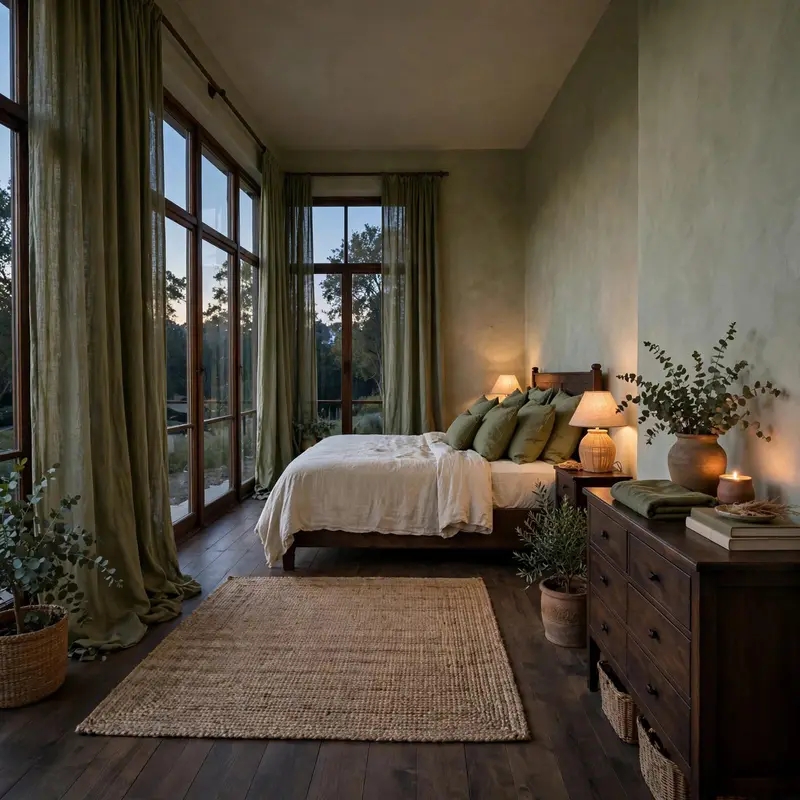
Drop the curtains from ceiling to floor, so the tall windows read even taller. Draw them closed at dusk, since the lamps glow best against closed fabric. Keep the dresser clear of the curtain path, so fabric never brushes the candle. Blow out the candle before sleep, since open flame near fabric risks fire. Wash the linen curtains on a gentle cycle, since sun weakens the weave over time.
18. Botanical Print Gallery
Ten black-framed botanical prints hang in two rows above a sage green upholstered headboard. White bedding spreads across the bed with sage pillows and a folded white throw. Light wood nightstands hold a potted plant, a brass candlestick, books, and a vase of pampas grass. Rattan chair with a sage pillow sits by the tall window on the right. Dried eucalyptus garlands drape from the curtain rod, and a sage rug lies under the bed.
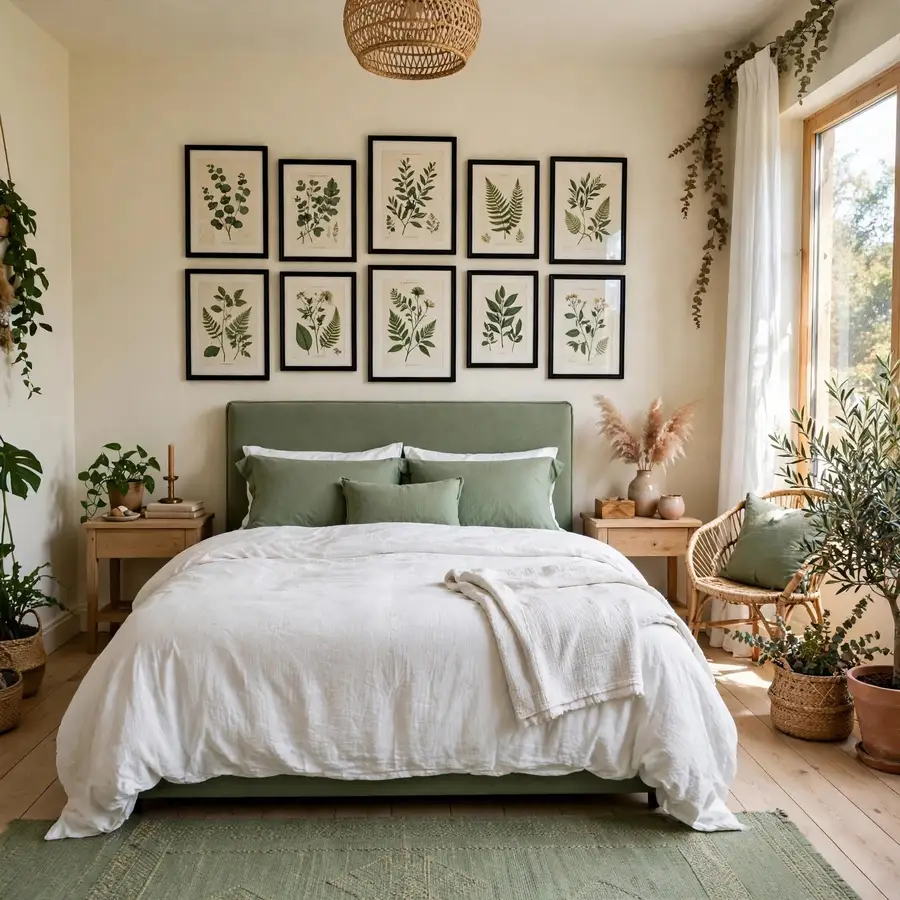
Hang the largest frames first, then fill the gaps with the smaller ones. Keep the gaps even, since uneven spacing shows fast in a grid. Use picture hooks rated for the frame weight, and check the label before hanging. Swap one print for a mirror when the wall feels too flat. Dust the glass with a dry cloth, since spray can seep under the frame.
19. Rattan Pendant, Teal Bedding
Large woven rattan dome pendant hangs over a light wood bed with teal green bedding. Cream pillows sit at the head of the bed against a slatted wood headboard. Rattan nightstands flank the bed, holding folded towels, a vase of pampas grass, and a candle. Tall palm in a woven basket stands in the right corner by sheer white curtains. Macramé hangs on the left wall above woven baskets with dried palm leaves.

Center the pendant over the bed, so it lights the bedding and not the floor. Fit a warm bulb, since cool light turns teal bedding blue. Keep the nightstands low and plain, so the pendant stays the lead shape in the room. Swap the folded towels for a small plant when the top looks bare. Dust the rattan weave with a dry brush, since dust hides deep in the gaps.
20. Canopy Bed, Green Drapes
Deep green velvet drapes hang from the posts of a dark wood four-poster bed, tied back with bands. Cream bedding spreads across the bed with a deep green velvet throw and a green pillow. Brass table lamps glow on dark wood nightstands on both sides of the bed. Framed botanical print hangs on the cream wall above the headboard. Cream rug with a woven pattern lies on the dark wood floor by the bed.
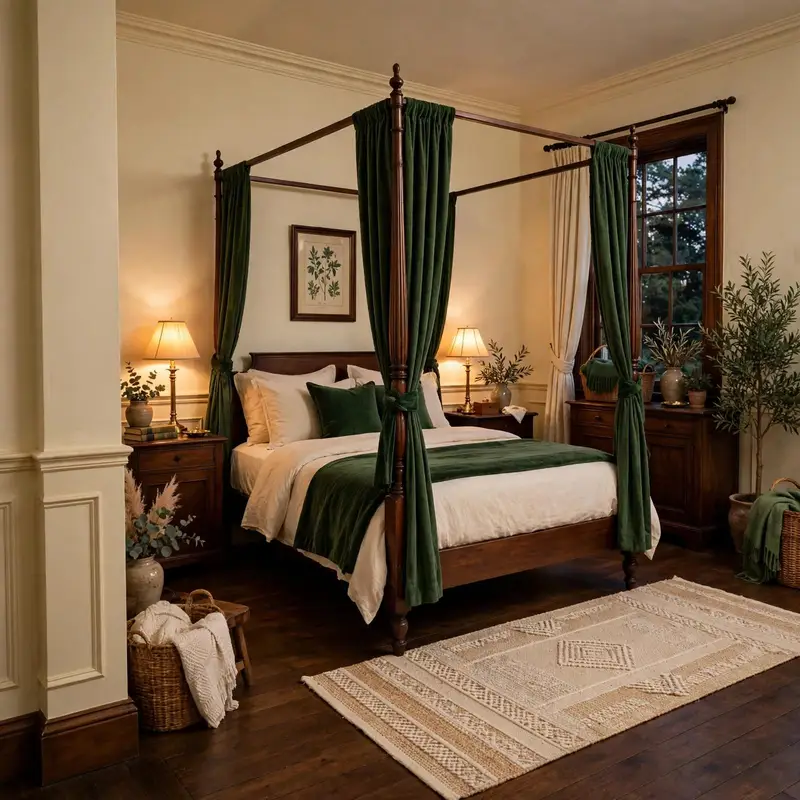
Tie the drapes back with bands at post height, so they frame the bed and not the pillows. Keep the throw folded at the foot, since a loose throw hides the bed frame. Swap the velvet pillow for a linen one when the bed feels too heavy. Check the post joints each year, since tall frames loosen with use. Vacuum the drapes with an upholstery head, since velvet holds dust.
21. Sage Dresser and Mirror
Sage green dresser with brass knobs stands on the right wall under an oval brass mirror. Vase of eucalyptus, a woven dish, and a folded cloth sit on top of the dresser. White bed with sage green bedding and a cream knit throw fills the left side of the room. Open window with sheer curtains fills the far wall with daylight. Woven basket with a sage throw sits on the wood floor by the window.
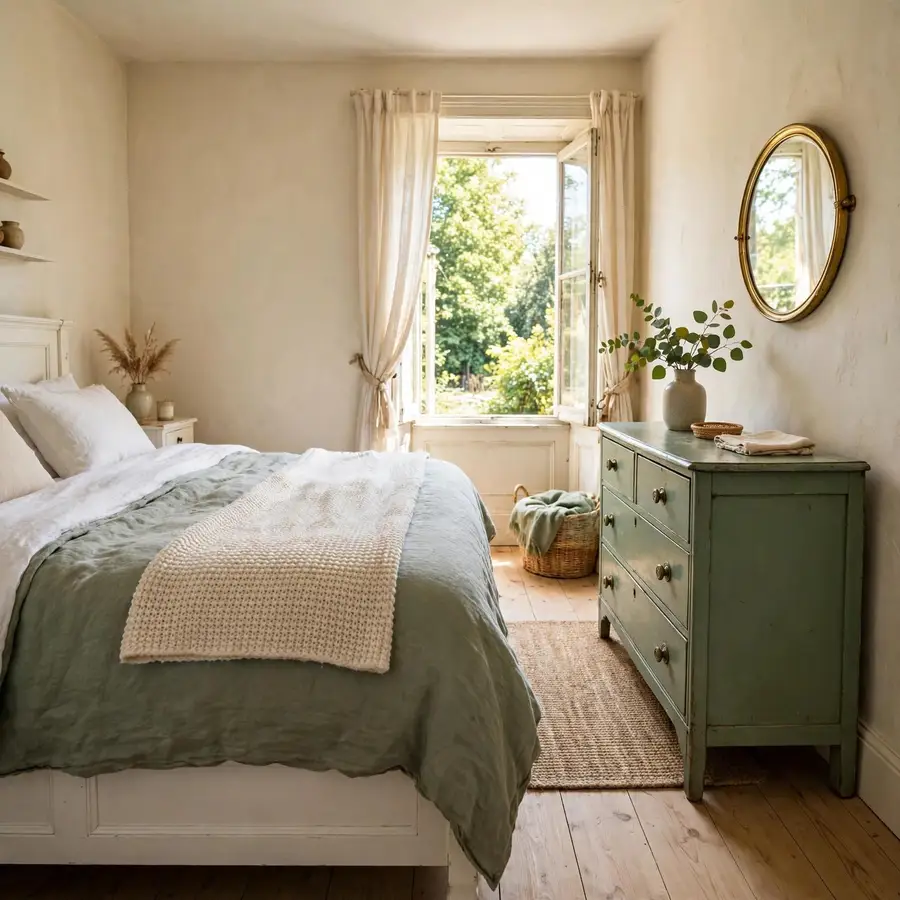
Anchor the dresser to the wall with straps, since a tall chest tips when drawers open together. Hang the mirror at eye level above the dresser, so it reflects the window and not the ceiling. Keep the top to three items, since a crowded top hides the wood. Swap the woven dish for a small tray when keys and coins need a home. Polish the brass knobs with a soft cloth, since fingerprints show fast on metal.
22. Green Striped Wallpaper
Green and white vertical stripes cover the wall behind a white bed. White bedding spreads across the bed with green and white striped pillows at the head. Green ceramic lamps with white shades stand on white nightstands on both sides. Striped rug in green and white lies under the bed across the light wood floor. Olive tree in a woven basket stands by the tall window with white curtains.
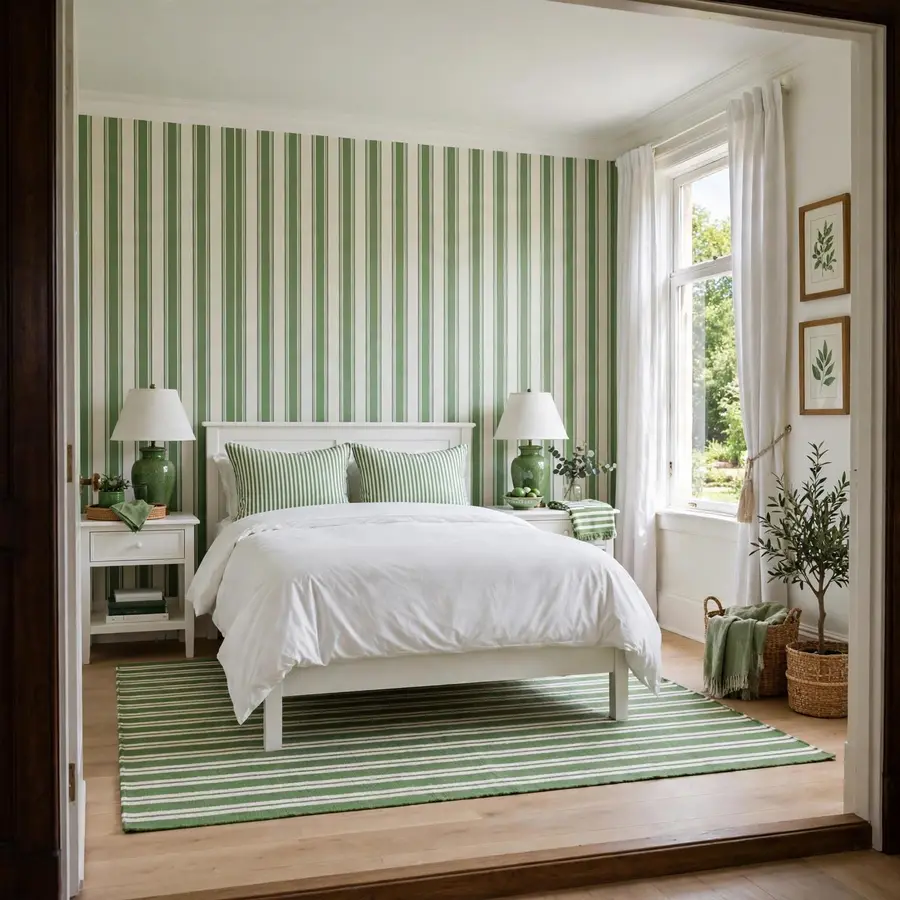
Line the paper with the stripes plumb, since a lean shows fast on vertical lines. Match the stripes at the seams, and trim the excess at the ceiling and baseboard. Keep the bedding plain white, so the wall stays the lead pattern. Swap the striped pillows for solid green ones when the room feels busy. Dust the paper with a dry cloth, since water can lift the edges.
23. Forest Nook for Reading
Forest green paneled walls form a nook in the far corner with a tan leather armchair. Brass floor lamp glows beside the chair. Green pillow rests on the seat. Tall dark wood bookshelf filled with books stands on the right wall by the window. White bed with a forest green knit throw fills the left side of the room. Cream rug lies on the dark wood floor, and a potted olive tree stands nearby.
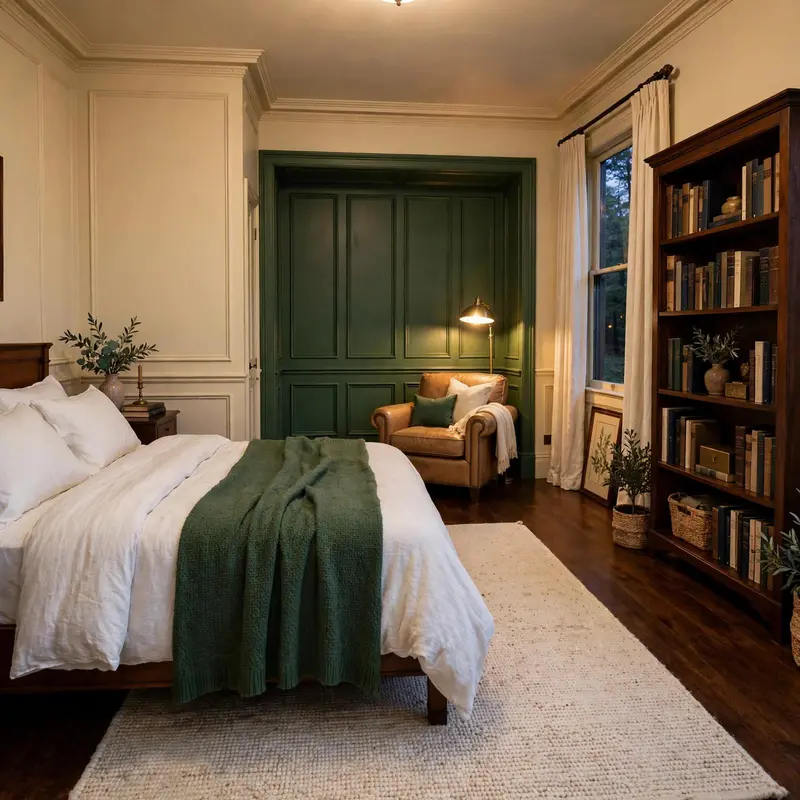
Set the chair at an angle inside the nook, so it faces the room and not the wall. Place the lamp behind the chair shoulder, so light falls on the book and not in the eyes. Keep a small table or stool beside the chair for a book and a cup. Swap the green pillow for a cream one when the nook feels too dark. Dust the bookshelf top monthly, since it sits above eye level and gathers dust unseen.
24. Oak Beams, Sage Bedding
Rough oak beams cross the white ceiling above a light wood bed with sage green linen bedding. Cream pillows sit at the head of the bed against a rough wood headboard. Large vase of olive branches stands on the left nightstand beside a candle and stacked books. White curtains frame the wood-framed window on the left wall. Woven basket with a sage throw sits on the floor by a potted olive tree.
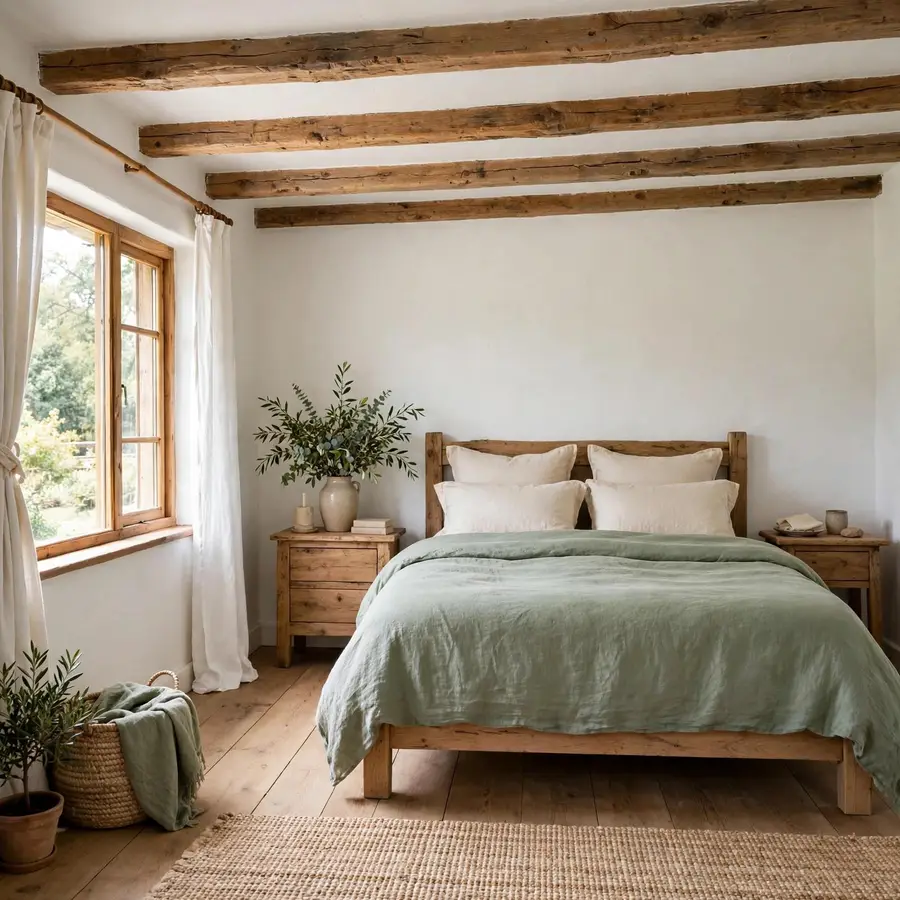
Leave the beams bare, since paint hides the grain that gives the room warmth. Dust the beams with a long dry duster each month, since dust shows fast on dark wood. Keep the bedding light, so the beams stay the darkest line in the room. Swap the vase for a smaller one when the nightstand looks crowded. Check the beam fixings when the house settles, since old wood shifts with the seasons.
25. Emerald Rug Underfoot
Deep emerald rug with a thick shag pile spreads under a light wood bed on pale wood floors. Cream bedding spreads across the bed with two emerald velvet pillows at the head. White ceramic lamps with cream shades stand on light wood nightstands on both sides. Framed green watercolor hangs above the slatted wood headboard. Fiddle leaf tree in a woven basket stands by the tall window with sheer curtains.
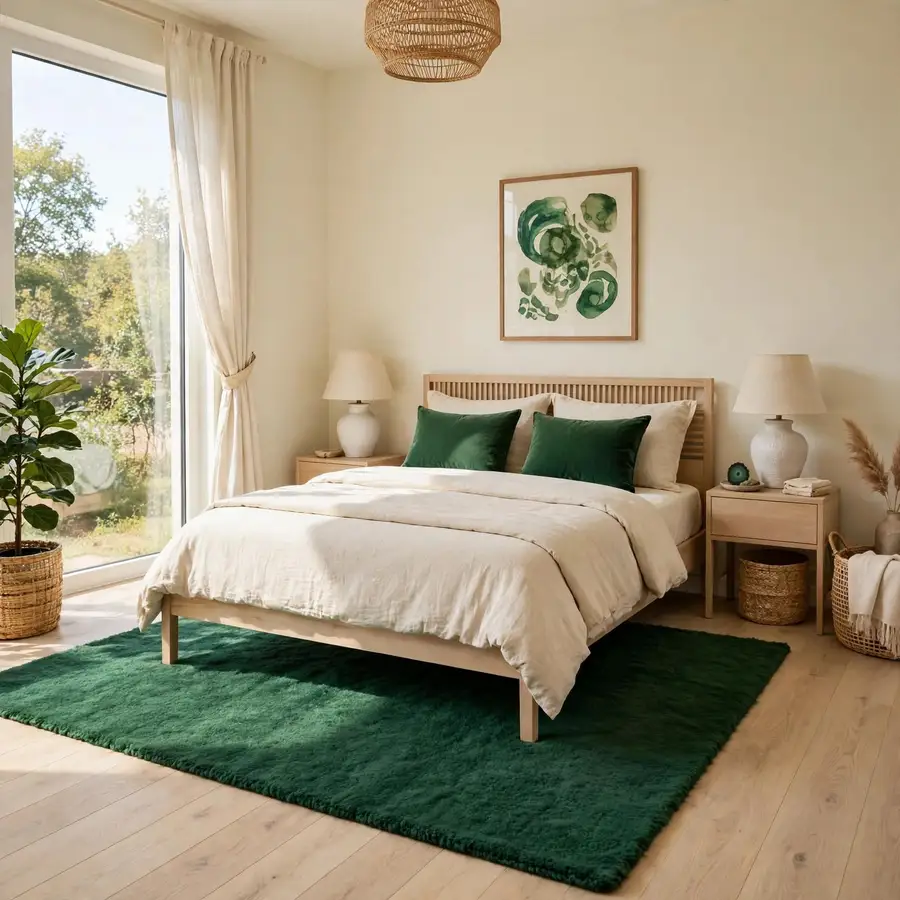
Place the rug so it runs past the bed on three sides, leaving a soft landing for feet. Choose a low pile, since thick shag traps dust and sheds fibers. Keep the bedding light, so the rug stays the deepest green in the room. Swap the rug for a flat weave in warm months when the shag feels too heavy. Vacuum the rug twice a week, since dark pile shows lint fast.
How to Choose Green Decor for Your Bedroom
Room size, light, budget, and who sleeps in the room decide the choice here. Dark greens suit large rooms with tall windows, while pale greens suit small rooms with one window. Paint suits a long stay, while fabric suits a short one, and plants suit a bright sill.
- Small room: Mint or sage walls open a tight room. Pair Mint Walls, Spindle Bed with white bedding and one green rug.
- Large room: Forest or emerald walls fill a big room. Pair Forest Green Accent Wall with light wood and cream bedding.
- Low light: Lamp-lit rooms suit velvet and dark wood, so pair Emerald Velvet Headboard with brass lamps and cream bedding.
- Renter-friendly: Fabric-led ideas leave no marks. Pair Olive Linen Bed Layers with a green rug and keep the walls as they are.
- Bright window: Plant-heavy ideas suit a sunny sill. Pair Clay Lamps, Pistachio Walls with terracotta pots and a woven rug.
Colors, Materials, and Textures That Work Together
Green stays calm when one shade leads and the rest support it. Bedroom decor ideas green work best with a clear lead shade, two supporting shades, and one warm accent.
- Sage and rattan: Muted sage with a rattan headboard works. Rough weave warms the flat paint, and the tones stay close.
- Emerald and brass: Emerald velvet with brass lamps works. Metal shine lifts the dark fabric, and the pair reads rich at night.
- Olive and linen: Olive linen with light wood works, since the soft cloth calms the grain and the pair feels lived-in.
- Forest and cream: Forest green with cream bedding works. Pale cloth breaks the dark wall, and the pair stays crisp.
- Mint and white: Mint paint with white furniture follows the 60-30-10 split as a rule of thumb. Pale green leads, and white fills the rest.
How to Recreate the Look Step by Step
Most of these rooms follow the same order. Walls come first, then the bed, then the large pieces, then the small accents. Work in that order, since each layer sets the space for the next one. One afternoon covers the fabric-led rooms, while paint-led rooms need a full weekend.
What You’ll Need
- Green paint in two shades
- Linen bedding set
- Woven jute rug
- Two table lamps
- Curtain rod and rings
- Picture hooks and level
- Potted plants and pots
- Throw blanket and pillows
Simple Steps
- Measure the room: Measure the wall behind the bed and the floor space on both sides. Leave a hand-width gap beside the bed for bedding to tuck.
- Paint the walls: Paint the bed wall first, then the side walls, and let each coat dry fully. Test the shade beside the bed in daylight and lamp light.
- Place the bed: Center the bed on the painted wall, as in Forest Green Accent Wall. Check equal gaps on both sides before the nightstands go in.
- Set the nightstands: Set one nightstand on each side, as in Emerald Velvet Headboard. Keep the tops clear for a lamp and one small item.
- Layer the bedding: Make the bed with the fitted sheet, then the duvet, then the pillows. Fold the throw across the middle third, as in Olive Linen Bed Layers.
- Hang the curtains: Hang the rod wide and high, as in Emerald Velvet Curtains. Let the fabric stack past the frame and pool just above the floor.
- Add the accents: Place the rug under the bed, then the plants, then the art, as in Botanical Print Gallery. Step back and remove one item when the room feels full.
- Check the light: Switch on the lamps at dusk and check the greens in lamplight. Swap the bulb for a warmer one when a shade turns gray.
Layout and Placement Rules
- Focal wall: Paint the wall behind the bed first, as in Forest Green Accent Wall. Bed anchors the room, and the eye lands there first.
- Bed scale: Keep about a hand-width gap between the bed and each nightstand, as in Emerald Velvet Headboard. Bedding tucks without bunching.
- Walking space: Leave a clear path from the door to the window, as in Mint Walls, Spindle Bed. Room stays easy to cross at night.
- Art height: Hang framed prints with the center at eye level, as in Botanical Print Gallery. Art hung too high floats away from the bed.
- Light layers: Use two lamp points plus daylight, as in Moss Velvet Bed Frame. One light flattens dark greens, and two give depth.
Budget and Renter-Friendly Swaps
- Paint swap: Use a green duvet and pillows instead of green paint, as in Olive Linen Bed Layers. Color leaves with the bedding.
- Wallpaper swap: Choose peel-and-stick paper on one wall instead of paste, as in Leafy Wallpaper Backdrop. Print peels off clean at move-out.
- Headboard swap: Trade a painted wood headboard for velvet, as in Emerald Velvet Headboard. Bed loses some softness but keeps the shape.
- Rug swap: Pick a flat-weave rug instead of shag, as in Emerald Rug Underfoot. Floor stays easy to vacuum with less depth underfoot.
Safety and Upkeep
- Anchor furniture: Anchor the dresser in Sage Dresser and Mirror to the wall, since drawers tip when they open together. See how to anchor heavy furniture before loading the drawers.
- Candles: Keep candles on a flat tray away from throws and curtains, as in Forest Plaid Bedding. Open flame near fabric risks fire.
- Cords: Run lamp cords behind nightstands, as in Emerald Velvet Headboard, since loose cords trip feet at night.
- Ladder work: Use a stable step ladder with a spotter for ceiling work, as in Striped Green Ceiling. Stay steady, since a wobble at height risks a fall.
- Plant water: Water sill plants in the sink, as in Clay Lamps, Pistachio Walls. Spills stain plaster and warp wood fast.
Mistakes That Ruin the Look
Too Many Greens at Once
Four or five greens fight each other, since no shade leads the room. Fix it by keeping one lead green, one supporting green, and cream or white for the rest.
Dark Walls With No Light
Deep green walls go flat in a dim room, since the color swallows the little light there is. Warm lamps and a pale rug lift the room, as in Forest Green Accent Wall.
Matching Sets Everywhere
Matched bedding, curtains, and rug read flat, since one green repeats with no break. Break it by mixing two greens with cream, wood, and one metal.
Curtains Hung Too Low
Rod hung at the window top shortens the wall, since the fabric stops the eye at the glass. Hang the rod near the ceiling instead, as in Emerald Velvet Curtains.
Heavy Furniture Against Dark Walls
Dark wood plus dark green walls close a room in, since no pale surface breaks the pair. Cream bedding and a pale rug open the pair up, as in Moss Velvet Bed Frame.
Frequently Asked Questions
Which green works best in a small bedroom?
Pale mint or sage works best, since light greens bounce daylight and keep walls from closing in. Pair Mint Walls, Spindle Bed with white bedding and one rug, then stop. Dark greens suit large rooms with tall windows, not small ones.
Can green bedding replace green paint?
Green bedding carries the color without touching the walls, so it suits renters and quick changes. Olive Linen Bed Layers shows the idea at full strength, with olive linen from pillows to hem. Paint suits a long stay, while fabric suits a trial run.
How do I keep green from looking flat?
Mix two greens with cream, wood, and one metal, since contrast keeps the palette moving. Sage and rattan, emerald and brass, and olive and linen each show the mix at work. One lead shade plus one accent beats five close greens.
What goes with emerald green in a bedroom?
Brass, cream, and dark wood suit emerald best. Metal lifts the dark tone, and pale cloth breaks it. Emerald Velvet Headboard pairs all three, with brass lamps, cream bedding, and walnut nightstands. Gray softens the pair when brass feels too bright.
Is green wallpaper hard to live with?
Large leaf prints suit one wall, since a full room of print overwhelms a small space. Leafy Wallpaper Backdrop keeps the other walls cream and the bedding plain. Peel-and-stick paper suits renters, since it peels off clean at move-out.
How do I light a dark green bedroom?
Two warm lamp points plus daylight suit dark greens best, since one light flattens the color. Moss Velvet Bed Frame uses a floor lamp and a window. Emerald Velvet Headboard uses two table lamps. Warm bulbs suit green, since cool light turns it blue.
Conclusion
Start with the wall or the bed, since those two set the tone before anything else joins in. Sage walls from Rattan Arch Headboard pair well with the emerald rug in Emerald Rug Underfoot. Olive bedding suits a room that already has dark wood. Bedroom decor ideas green reward restraint. Stop when each green has a clear job and the room still has empty wall space. Empty space lets the greens breathe and keeps the room easy to change later.
Paint one swatch on the wall behind the bed and live with it for two days. Check the swatch in morning light, lamp light, and at night before choosing the wall color. When the swatch looks gray or muddy under lamps, shift to a warmer green. Daylight that makes the swatch look too bright calls for a deeper shade with more gray in it. One swatch beats a full wall of the wrong green.